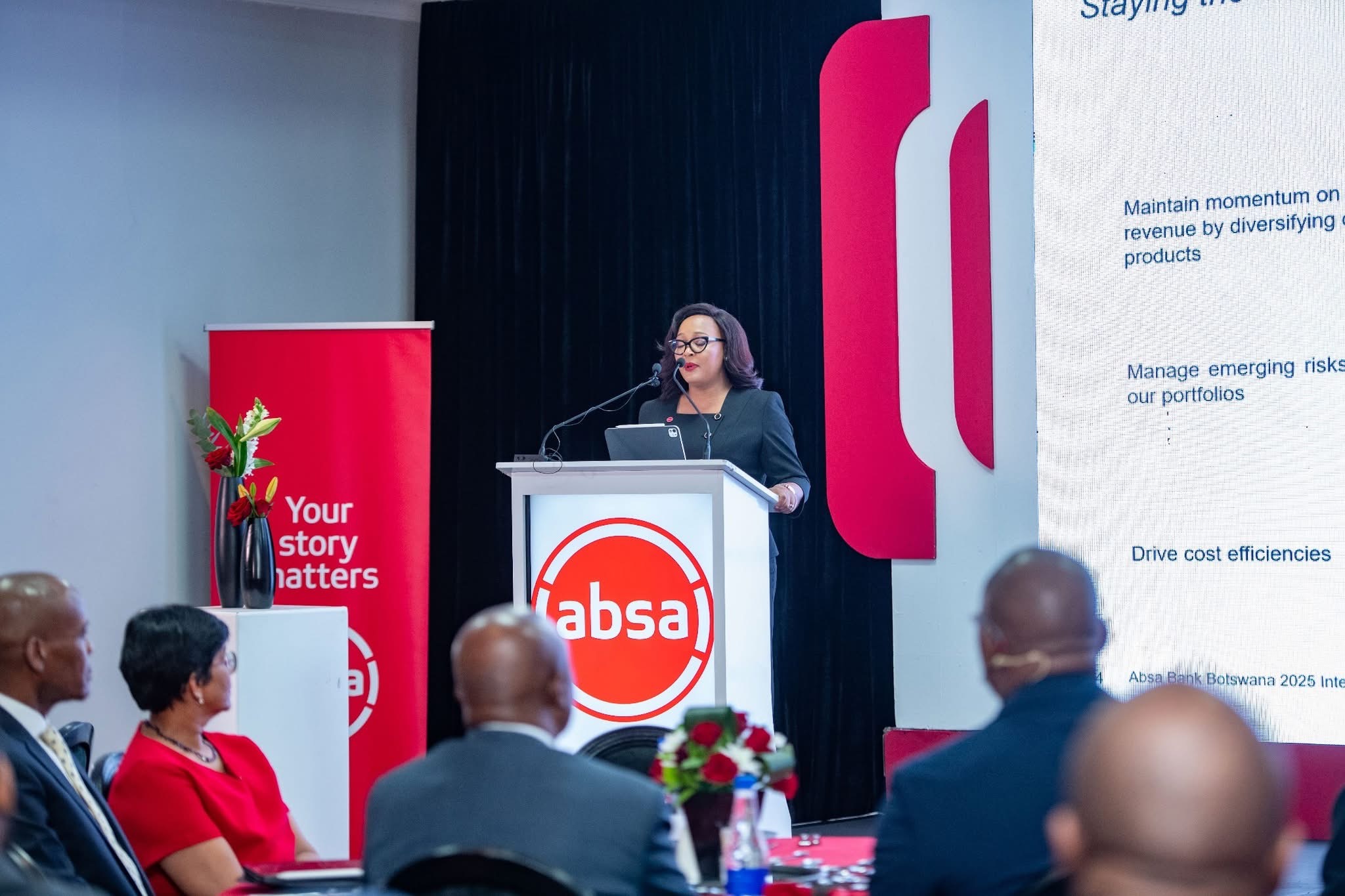
When Absa Bank Botswana’s Managing Director announced that the bank would not pay a dividend for the first half of the year, some investors were caught off guard.
While profits were down by more than a quarter during the first half of the year, from P428.6 million to 319.6 million, investors had braced for at least a smaller payout, not a complete halt. But Managing Director (MD) Ms. Keabetswe Pheko-Moshagane explained the decision is about protecting the bank in uncertain times.
In line with the prevailing economic uncertainties, the board has decided to defer dividend payout for the interim period,”
Ms Pheko-Moshagane said when presenting the 2025 first half results.
“This will be reviewed at the end of the financial year, dependent upon the company’s financial results and market conditions.”
“I want to uplift it to the strategic view,” she began explaining, framing the decision against a bigger backdrop. “One needs to be alive to the fact that we are managing volatility here.”
By volatility, she meant the sudden swings that have come to define Botswana’s financial markets.
It means you could be okay this month, and next month all the different things… could have changed,”
she explained.
That unpredictability was the main reason the board decided not to pay an interim dividend, even though on paper the bank still looks financially sound.
- For example, Finance Director Mr. Kudakwashe Mukushi revealed that Absa’s capital position—basically the financial cushion it keeps to protect against losses—remains strong. Its capital adequacy ratio reached 19%, well above the minimum required by regulators. This means the bank has more than enough “shock absorbers” to handle risks while still supporting growth and earning profits.
- The bank also has healthy liquidity ratios (at 13.2%), which measure how easily it can turn assets into cash to cover short-term needs.
The reality is the profitability is down 27%, but the key thing is the volatility that we are seeing in liquidity and across the market is quite key,”
Ms. Pheko-Moshagane said.
While the bank’s finances remain strong, Ms Pheko-Moshagane gave an example that shows why the board is being cautious: the market used to have about P6 billion in liquidity, but now she observed that some days close with only P300 million. Liquidity in a financial system means how much ready cash (or cash-like funds) is available for banks and businesses to use right away. Banks like Absa need this money to be able to lend it out.
Read: Money Is Expensive for Banks: How It Costs You As An Investor
Read also: Absa Looks For Cheaper Money As Shareholders’ Profit Falls
“Sustainability in the long term is always critical in our decision around dividend payout,”
Ms. Pheko-Moshagane said.
The preference, Ms Pheko-Moshagane added, is to “walk our journey with our shareholders in a sustainable manner as opposed to a shorter-term view.”
Eventually, when we pay dividends, we are paying dividends in a business that is more sustainable, which we believe is what each shareholder wants,”
she concluded.